
How to Search Criminal Dockets
Start your docket search at the Arizona Judicial Branch Public Access service. It costs nothing. You pass a verification image, and the service pulls case information from participating Arizona courts. A case number works best as your key. Santa Cruz County criminal files often carry a CR prefix, in a local form such as CR-23-0026. Searching by party name can work too. Common names and spelling differences make it smart to confirm the court and filing date before you trust a hit.
Keep one thing clear: the statewide display is informational, not the official court record. It refreshes weekly on Friday. The data only reaches through Wednesday. Need a fresh setting or a disposition? Call the clerk of the court listed in the result. The Clerk of the Superior Court holds felony files. Santa Cruz Justice Court and each Municipal Court keep their own limited-jurisdiction records.
- Identify the filing court from a citation, notice, or prior order.
- Complete the Public Access verification and search by full case number or party name.
- Match the court, filing date, case type, and unrestricted parties before relying on the result.
- Read charges one by one, then review events and hearings in date order.
- Use eAccess for an eligible Superior Court image, or ask the proper clerk for an official copy.
Santa Cruz Criminal Search Gaps
A blank screen does not close the case. Public Access leaves out sealed matters. It also skips local ordinance charges, orders of protection, juvenile delinquency cases, and several other protected classes. A brand-new event may also post after the statewide service's Wednesday cutoff. Old paper records and a search typed with the wrong punctuation cause the same gap.
Go straight to the court when the docket comes up empty. For Superior Court, call the Clerk at 520-375-7700. You can also visit Suite 2200 at 2160 North Congress Drive in Nogales. Three public-access computers serve courthouse users. Justice Criminal handles county misdemeanor and preliminary felony questions at 520-375-7761. Nogales Municipal Court records require a written request. Staff charges a published research fee of $17 before the search begins.
Note: A missing online criminal docket may be current, local, old, or restricted. Confirm its status with the court custodian.
Santa Cruz Criminal Desk Routes
Match the phone to the file. The Clerk of the Superior Court answers felony record questions at 520-375-7700. Justice Criminal uses 520-375-7761. Nogales Municipal Court uses 520-287-6571. Patagonia Municipal Court publishes 520-394-2958. Give staff the case number, the court, the party name, and the exact event or date you need. Ask for procedural help or a copy quote rather than legal advice. Calling the right desk is also the best move whenever a statewide result skips a local ordinance charge.
What a Criminal Docket Shows
A Santa Cruz County criminal docket opens with a case header. Below it come unrestricted parties and lawyers, charges, events, and hearing data. The header can list the case number. Filing date, title, category, status, court location, and judicial officer may appear there too. Charge Information sits apart. It can show the statute, description, classification, and a charge-level disposition. That separation matters. Without it, a broad case status gets read as the result of every count.
| Case Number | A CR identifier, with punctuation that may vary between local and statewide displays. |
|---|---|
| Charges | The cited statute, offense description, classification, and result for each count. |
| Events | Dated filings, minute entries, orders, settings, and document availability. |
| Hearings | Courtroom, date, hearing type, and a result when one has been entered. |
| Disposition | Charge-specific text such as a plea, conviction, dismissal, or acquittal as recorded. |
Empty does not always mean empty. A blank hearing result may simply mean no result has been entered yet. In the same way, “Document Not Available Online” does not by itself signal a sealed filing. The event may have no attached image. Or the document may just not be sold online. When the text itself matters, ask the Clerk for the signed order or minute entry.
Santa Cruz Charge Status Differences
Two labels answer two different questions. A case marked “Active” may still have work pending. One count may show dismissed or convicted, and work still remains. Read every listed charge, then compare the newest minute entry, order, and hearing result. The comparison matters most when a case carries several counts or a post-judgment event.
| Display | What It Answers | Best Check |
|---|---|---|
| Case status | Whether the file is pending, closed, or otherwise classified | Newest event and court entry |
| Charge disposition | The result recorded for one count | Signed judgment or disposition |
| Hearing result | What the system records for a setting | Minute entry or order |
Public Access can lag behind a courtroom event. For an urgent Santa Cruz County criminal setting, call Superior Court at 520-375-7730 or the correct Justice or Municipal clerk. Never read silence as an outcome.
Santa Cruz Criminal Signed Orders
When an event description matters, note its date and exact wording. In eAccess, look for a document icon or an Add to Cart option. No image offered? Contact the Clerk with those details. A public terminal may reach an open record that remote service will not deliver. A signed judgment or certified disposition is not the same thing as a free docket printout. The Clerk can explain copy and certification routes. Justice and Municipal documents must come from their own clerks. Public Access can still display the case history.
Stages on a Criminal Docket
A criminal docket usually starts with a complaint or other initial filing. An initial appearance, a charging event, and arraignment come next. Release or bond orders, disclosure, motions, and status or pretrial settings may follow. The matter can then resolve by plea or trial. A verdict or other disposition comes before sentencing when sentencing is required. Post-judgment or appeal events may follow. They can stretch the record even longer.
Santa Cruz criminal docket flow: Filing › Arraignment › Pretrial › Plea or Trial › Disposition › Sentencing
Match every stage to a real minute entry or event. A calendar label like “DISPOSITION” only names the hearing type. It says nothing about the result. Settings move, and one plea can settle some charges while others stay open. Trust the signed order and the charge result. Do not guess from a short label on the docket.
Santa Cruz Criminal Event Terms
Santa Cruz court calendars lean on short labels. Space is tight, so each line marks one specific court act. Treat these terms as procedural markers for the criminal docket, not as a plain retelling of the whole case.
- Minute Entry
- The court's written record of what occurred at a proceeding or of a ruling.
- Order: Setting
- A written event that places a hearing or trial on the calendar.
- Continued or Reset
- A setting moved to another date. Check the newest order for the operative date.
- Vacated
- A scheduled event or prior order removed from effect.
- Disposition
- The recorded resolution of a case or individual charge.
Local calendar entries include arraignment, change of plea, violation hearing, sentencing, status conference, and setting for trial date. Each description tells you why the case was set that day. What actually happened shows up in the hearing result and any later order.
Santa Cruz Criminal Filing Changes
E-filing does not look the same across all case types. The April 2026 Arizona matrix lists subsequent e-filing for Santa Cruz criminal matters. The county technology plan wants better electronic case transfer. It would move cases from Justice Court up to Superior Court.
Because of that split, separate systems can lag behind one another. That can happen on the same case path. Custody stays untouched by any of it. Each court's clerk still controls that court's record. Confirm the newest local entry with the clerk who holds it.
Which Court Holds Criminal Dockets
Felony dockets live at the Superior Court of Arizona in Santa Cruz County. The Santa Cruz County Justice Court criminal division handles county misdemeanors. Its jurisdiction is limited, and it also handles preliminary criminal work. Nogales Municipal Court hears city misdemeanors. Its own jurisdiction material includes DUI and shoplifting examples. Patagonia Municipal Court keeps town misdemeanor and code matters.
A felony may start in Justice Court during preliminary work. It can later open a Superior Court file. That does not make the two dockets the same thing. The local technology plan notes that Justice-to-Superior criminal transfers long moved the full paper file by hand. That is exactly why an electronic-transfer project was proposed. When the case path crosses levels, search both. Get copies from the clerk holding the specific record you need.
Santa Cruz Criminal Caseload Context
The court level matters, and official historical data shows it. In fiscal year 2021, Santa Cruz Justice Court reported 727 felony preliminary terminations, 439 other misdemeanor terminations, 252 other criminal traffic terminations, 182 DUI terminations, and 169 criminal failure-to-appear terminations. Read those as scale markers for the criminal docket. They are not current pending totals.
The Arizona annual court-data portal gives the wider reporting picture. An average predicts nothing about one case. It simply explains why a docket may hold many pretrial events before any final entry appears.
Santa Cruz Drug Court Events
Santa Cruz County runs a documented Adult Drug Court Program through Justice Court. Participation stays tied to the underlying criminal case. The public procedural events sit on that case docket. A short event label will not tell you anything about treatment or progress. Read it narrowly instead: confirm the court, the event date, and the public order. The clerk posts no separate public calendar, current eligibility list, or program length. The underlying Justice criminal docket remains the documented route.
Santa Cruz Criminal Sealing Definitions
The criminal sealing definition page is shown below from the Arizona Legislature source.
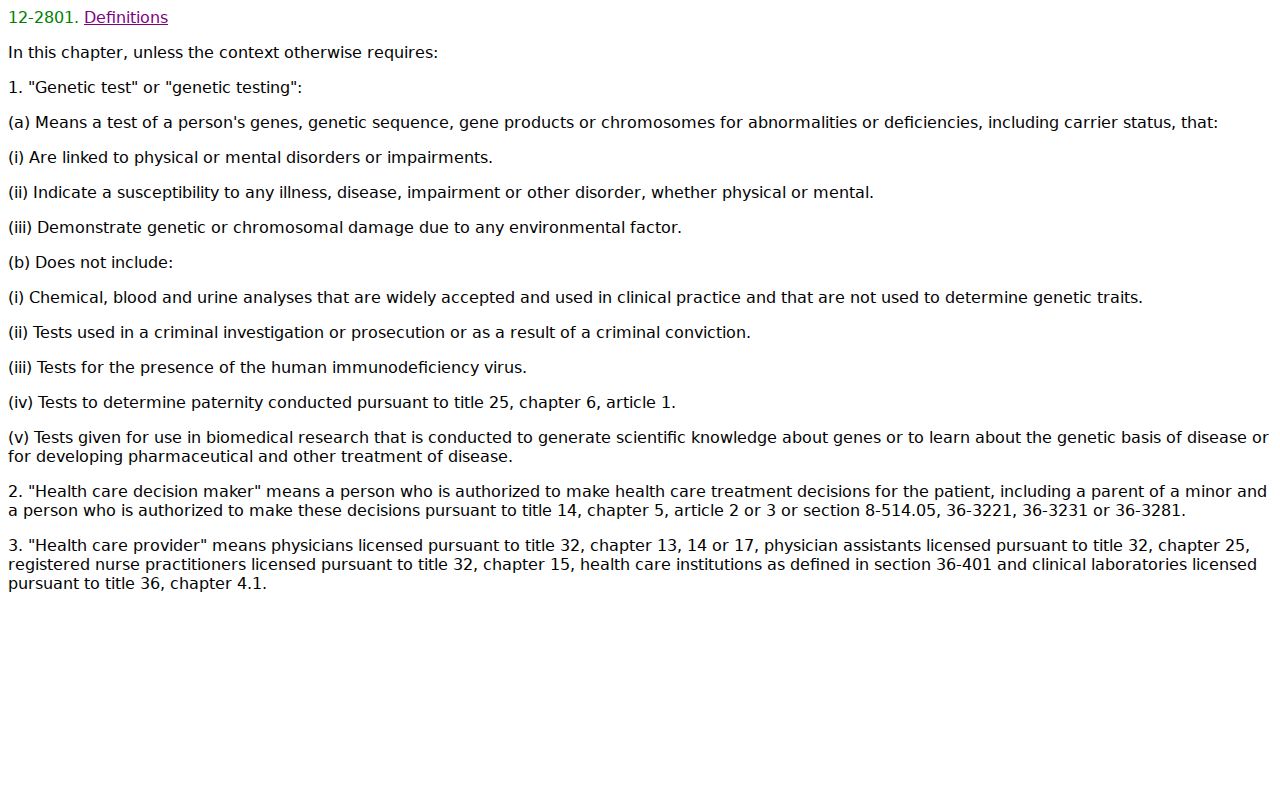
It sets the sealing terms beside the statute that governs how Santa Cruz County evaluates a request.
Public Access and Sealed Criminal Dockets
Arizona Supreme Court Rule 123 governs access to judicial records. Remote electronic access can be narrower than what you get at the courthouse. Public Access leaves out sealed cases, juvenile delinquency and incorrigibility matters, and orders of protection. It also excludes victim and witness data, plus other protected records. Sensitive parties, events, and images may also be suppressed in eAccess.
Arizona offers a petition process for sealing eligible criminal records. Sealing is a court decision tied to the case. It is not a request to scrub a search result. When a nonsealed record is not viewable remotely, ACJA §1-604 keeps on-site access available under its terms. Ask the clerk about inspection or a copy first. Never assume a missing web entry means the case is closed.
Key Santa Cruz criminal access rules:
A.R.S. §12-2801 defines terms used in Arizona's criminal record-sealing law.
A.R.S. §12-2802 sets the petition process and standards for eligible cases.
A.R.S. §8-208 limits juvenile-record access and identifies authorized circumstances.
Santa Cruz Criminal Sealing Petitions
The related petition law is captured from the official A.R.S. §12-2802 page.
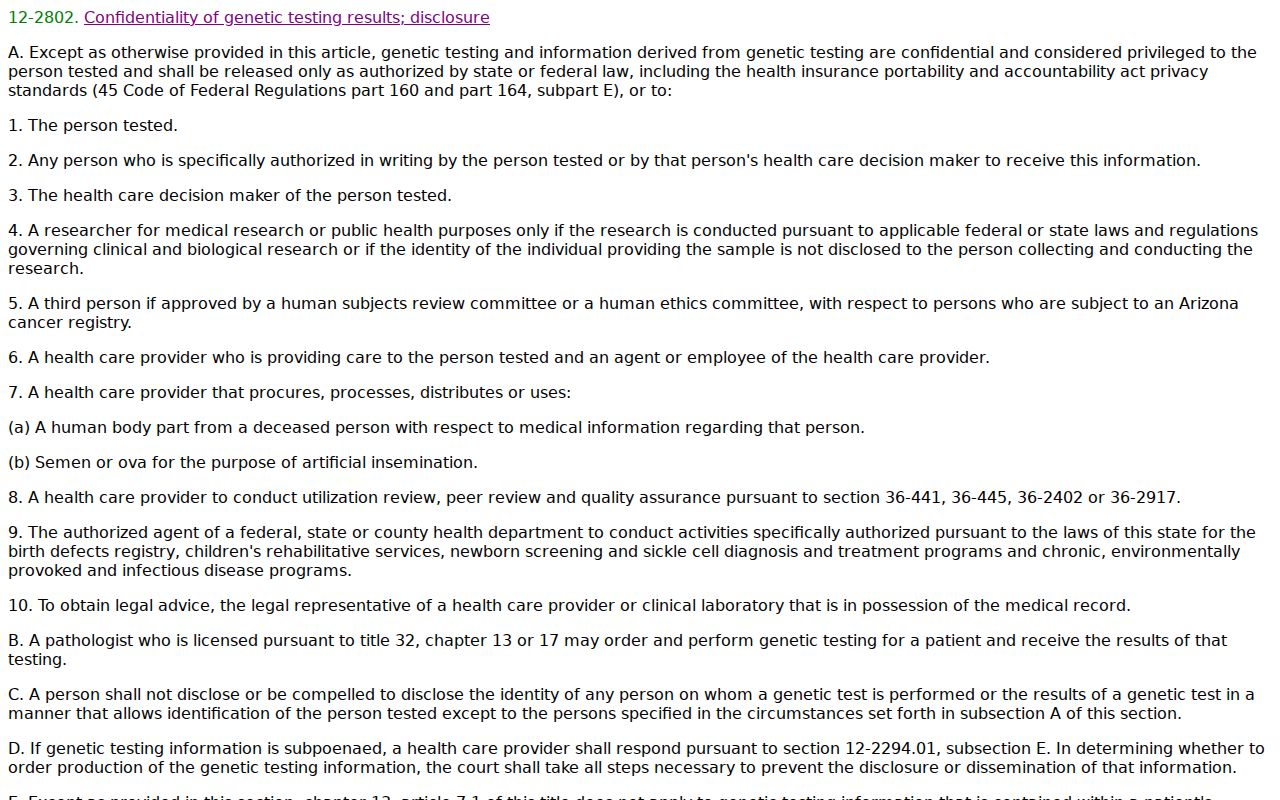
The petition statute confirms one point: a court order, not a portal change alone, controls the legal result.
Santa Cruz Juvenile Docket Limits
Juvenile access rules appear in the official A.R.S. §8-208 source.
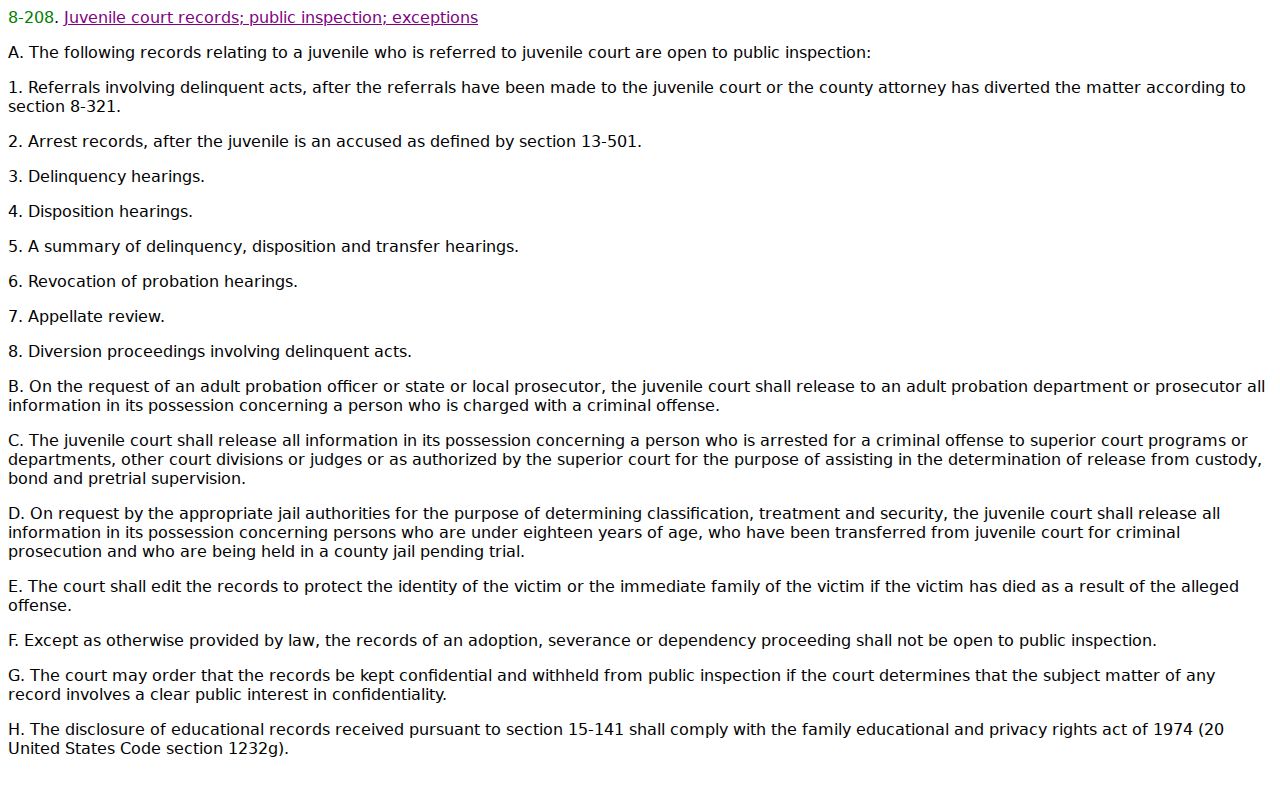
That separate authority is why juvenile material cannot be read like an ordinary adult criminal docket.